

What lessons can be learned for your wines?
In Chile, the 2026 climatic conditions have significantly increased differences between regions, with a direct impact on grape structure, ripeness, and balance.
In this article, discover the conditions observed through studies conducted by our field teams.
Focus on Curicó and Maipo: two valleys, two ripening dynamics, highlighting the challenges faced by winemakers.
These situations reflect issues now seen in Europe: vineyard heterogeneity, uneven ripening, and more difficult balance management.
Thanks to field data and Dyostem® analyses, we have identified the most effective levers to secure wine profiles under these conditions.
An early vintage with high alcohol potential
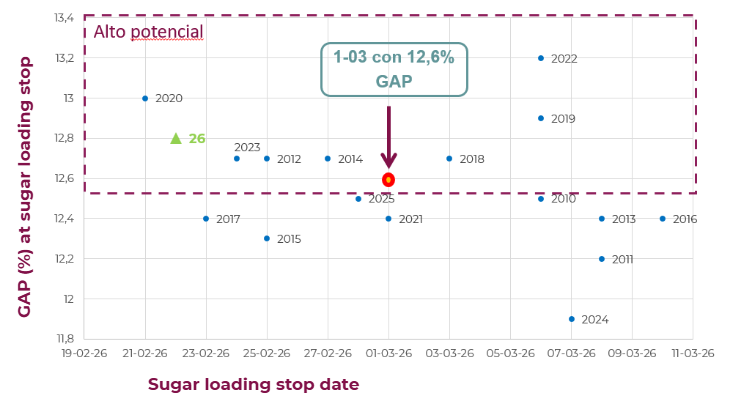
Dyostem® data highlights a 2026 vintage that is both early and concentrated, with an advanced sugar loading stop date and higher alcohol potential than historical references.
This atypical profile complicates balance management and requires precise adjustments during winemaking.


CURICÓ: Accelerated harvests and sometimes incomplete ripening
In Curicó, the season was marked by high summer temperatures, with highs around 32–33°C in January, followed by a rapid drop in March (around 25–27°C), disrupting the ripening dynamics.
Heavy rainfall in March forced producers to bring forward the harvest, often before optimal ripeness was reached. The subsequent drop in temperatures then slowed ripening, making balance management even more challenging.
MAIPO: A balance weakened by warm nights
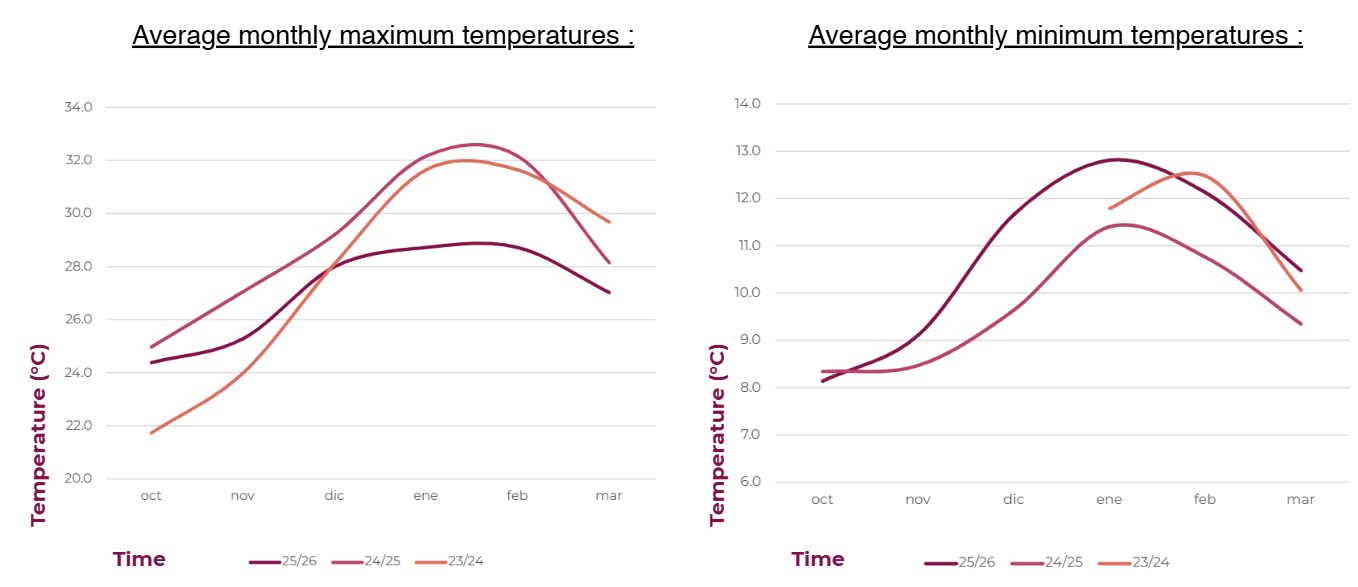
The 3 consequences of this situation :
Accelerated ripening:
With higher average temperatures, the plant does not “rest” at night. The metabolism remains active 24 hours a day, accelerating sugar accumulation and potentially bringing the harvest date forward, even if the afternoon temperatures were not “extreme heat.”
Malic acid degradation:
Warm nights are mainly responsible for the rapid drop in acidity. If minimum temperatures were high, it is likely that the musts have a higher pH than normal.
Color and polyphenols:
For red wines, the absence of nighttime cooling can hinder the synthesis of anthocyanins (color). The wines may have a lower color intensity than in the previous two years.
In conclusion
What Chile teaches us is that these challenges are no longer exceptions. Variability in ripeness, analytical imbalances, and profile heterogeneity are all realities that are increasing in European vineyards, vintage after vintage.
Anticipating them better starts with observing them more closely. This is the role of our field teams—and what we can achieve together for your wines.
If you would like to receive expert recommendations tailored to the observed conditions, please fill out our contact form.
Our teams will get back to you promptly with personalized solutions and advice.