


With Boisé Tan, we introduce a new range of ellagic tannins derived from carefully selected French oak, designed to support you at every stage of the winemaking process.
Discover a new French oak tannin range designed to support structure, balance, and protection from winemaking through bottling.
Our first references
FT 10
Fermentation & Aging
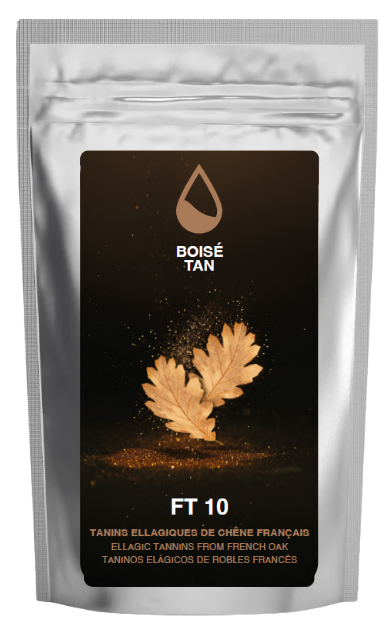
- Protects against oxidation
- Supports color stabilization
- Enhances phenolic structure
- Aids with clarification through interaction with proteins
- Helps manage reductive notes
SL 30
Pre-bottling
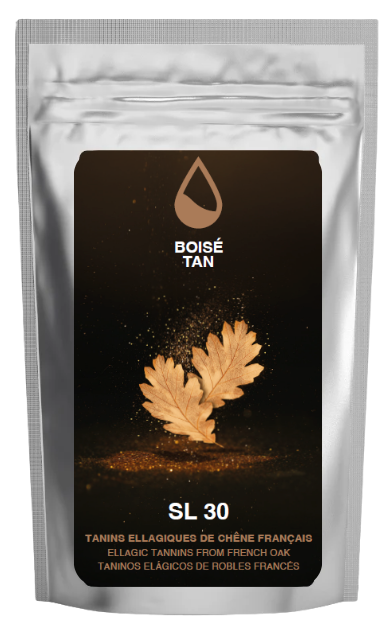
- Protects against oxidation after bottling
- Interacts with removes unstable proteins
Supports balance without increasing residual astringency
(Reference available exclusively in the USA)
An approach designed to adapt to your product objectives and wine styles.
Why this range?
Boisé Tan completes our oak alternatives portfolio by adding a final precision tool to support winemakers from fermentation through bottling.
Scientific expertise at the heart of innovation
This range is built on Boisé’s expertise in oenology and wood compound management, recognized for over 25 years, helping winemakers optimize their wines.


Wood chips and tannins : complementary tools
Wood chips help build aromatic complexity, while tannins help reinforce structure, volume, balance, and mouthfeel. Together, they give winemakers a more complete approach to shaping wine profile and stability.
Did you know?
After dealcoholization, selected tannins can help rebalance the wine profile by reducing the perception of astringency and acidity, while enhancing perceived sweetness, structure, and volume on the palate.
Our expert recommendations
For a dealcoholized
merlot
> Before dealcoholization
Addition of 5 g/L of SC 200
> After dealcoholization
Addition of 2.5 g/hL of FT10
Result: Cleaner, riper fruit expression, greater palate volume, subtle vanilla notes, and enhanced perceived sweetness.
For a dealcoholized
chardonnay
> Before dealcoholization
Addition of 3 g/L of DC 170
> After dealcoholization
Addition of 2.5 g/hL of FT10
Result: A richer, more premium profile with subtle toasted and chestnut cream notes, increased volume, and improved balance on the palate.


Request your samples today
Contact our team to request samples or discuss the best application strategy for your wine style and production goals.